Tax is an inevitable part of life for everyone. While contributing to the collective coffers helps keep modern society stable and advanced, it can also feel like a financial burden hanging like a millstone around individual taxpayers' necks.
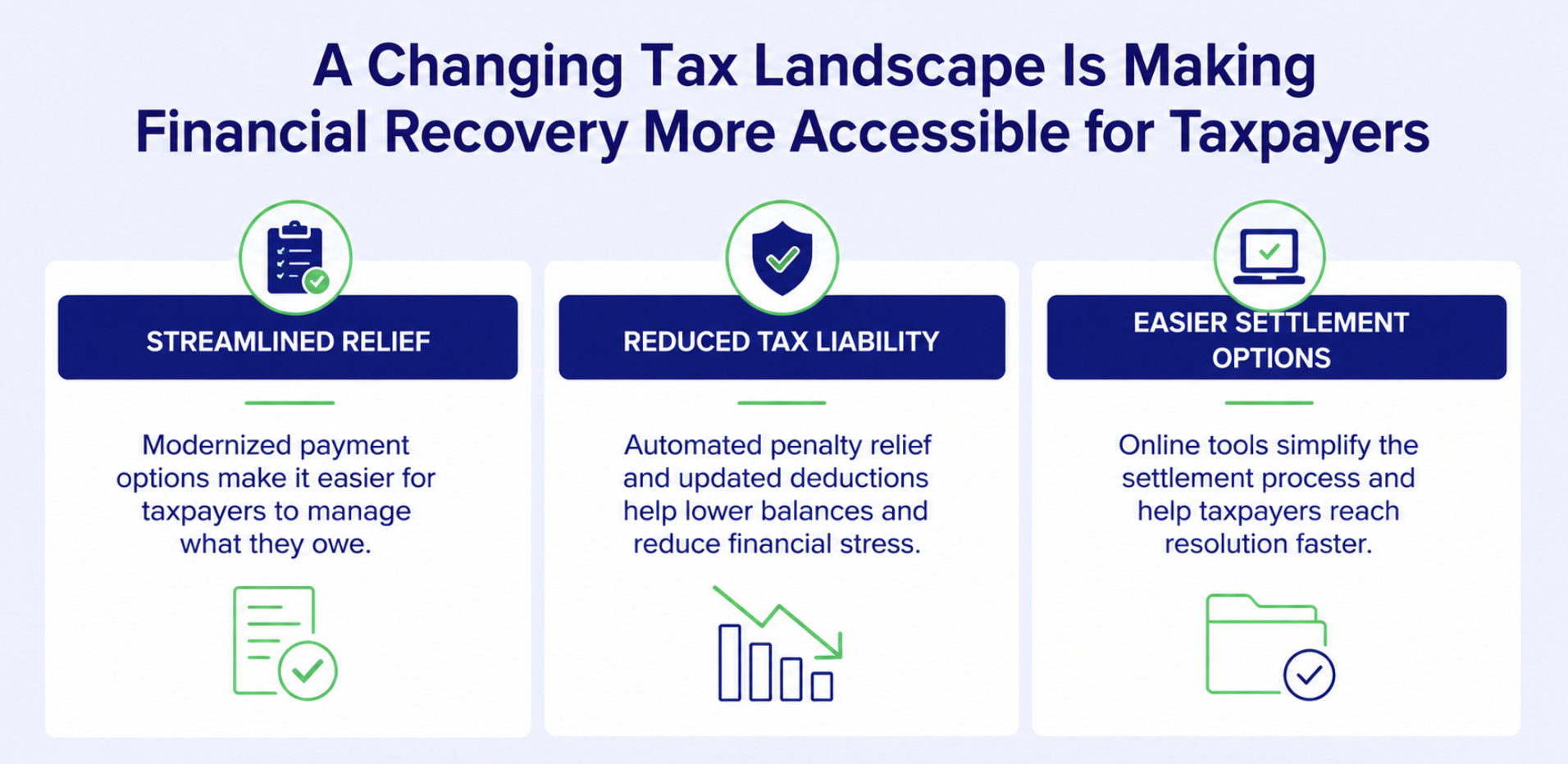
However, thanks to a variety of tax policies and relief options, it's easier for those afflicted by tax-related money worries to meet their obligations to the IRS while protecting their own finances. Alleviate Tax, a tax debt relief and IRS resolution service provider, examined how a changing tax landscape is making financial recovery more accessible to taxpayers.
Modernized Thresholds Accelerate Streamlined Relief
The main obstacle facing those with back taxes owed in the past was administrative as much as financial, at least in the context of seeking relief. Comprehensive financial disclosures and manual asset reviews frequently slowed resolution efforts for months. Expanded framework thresholds streamline this process substantially.
Most notably, the introduction of the Simple Payment Plan, which replaced the Streamlined Installment Agreement in 2025, enables those with balances of under $50,000 to set up a direct debit to cover regular installments on what they owe while simultaneously avoiding the complexities of qualification and eligibility checks. In light of the most recent IRS tax gap analysis, which estimates that 85% of taxes are paid voluntarily and on time each year, leaving a 15% delinquency rate, of which a significant proportion remains unpaid, any action taken to simplify repayment rather than making it a headache will help close this gap.
Many taxpayers still require additional support with managing repayments, despite this simplification. Those owing above the $50,000 threshold, for example, risk financial instability unless intervention is made to protect their liquid assets, and the process remains complex.
Why Automated Penalty Relief Reduces Overall Tax Liability
Beyond standardized payment plans, official agency adjustments are creating new opportunities to reduce penalties and lower total balances. Recent administrative updates emphasize automated relief and accessible settlement formulas.
Specifically, the IRS announced in summer 2026 the introduction of the Automatic Exemption from Penalty (AEP) program, which applies to eligible taxpayers based on their existing payment history. In brief, individuals who have previously filed on time and paid in line with deadlines over the previous three years (or 12 consecutive quarters) will not need to apply for penalty relief if they need it going forward.
Even taxpayers who do not meet the eligibility criteria can still get penalty relief, but they will need to apply via the IRS’s penalty relief for reasonable cause system, which takes into account a range of issues and disruptions, from natural disasters that impact an individual to personal circumstances like a death in the family.
Fresh statutory standard deductions from the One Big Beautiful Bill Act, which raise single-filer baseline deductions to $16,100 and married couple obligations to $32,200, shield a larger portion of income from taxable assessments. The benefit is that some taxpayers achieve more financial stability because their overall tax obligation is lower, leaving them better equipped to pay down other debts and build savings.
How Online OIC Applications Accelerate Tax Settlement
Under Internal Revenue Code Section 7122, the offer in compromise (OIC) program provides a legal mechanism for taxpayers to settle federal liabilities for less than the full amount owed. The agency evaluates applications based on three distinct statutory grounds: doubt as to collectibility, doubt as to liability, or effective tax administration. The IRS determines what a taxpayer can realistically pay depending on their monthly pay and assets. These factors determine what a fair settlement looks like.
This calculation establishes the minimum acceptable offer by combining the net realizable equity of the taxpayer's assets with their projected future disposable income. The IRS evaluates what assets are worth if sold quickly, minus mortgages and liens. Disposable income is determined by subtracting IRS-defined national and local standards for housing, transportation, and basic living expenses from gross monthly earnings, ensuring taxpayers retain funds for essential costs.
The recent introduction of new options for assessing OIC program eligibility online, as well as filing an application and making payments, is a major move in the right direction. It particularly benefits individual taxpayers, as it removes the administrative overhead that used to stand between them and seeking significant relief from what they owe.
Why Early Action Protects Assets and Restores Financial Stability
Even with these changes and ongoing improvements, long-term stability requires maintaining future tax compliance while resolving past debts. A structured payment agreement or penalty abatement can restore immediate liquidity, but staying current on upcoming quarterly filings and annual returns helps protect against collection action.
Taxpayers who act early leverage these expanded administrative pathways to protect their assets, settle outstanding obligations, and rebuild complete personal financial freedom. Professional tax services help those in need with selecting the best path to recovering from tax challenges and associated financial stability issues.